
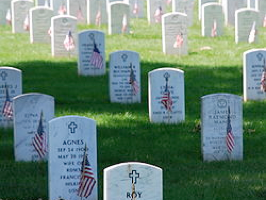
It’s hard to add much to the story told by the photograph. Some veterans of WWII live on, even today. It won’t be long until they will be alive only in our memories
About sixteen million of our fellow citizens served in the armed forces during WWII. To put that number in perspective, in 1940 the population of the United States was slightly over one hundred thirty two million. My long division is not so hot, but my now antiquated HP12C which never fails me calculates that 12% (give or take) of our total population wore the uniform and served in our defense. Of those serving 416,000 died during the course of hostilities. I’m sure that many others died subsequently as a result of injuries suffered during the war, but I don’t have that number. In any case, millions lived on after the war. They married or didn’t, had kids, found jobs, got college degrees, started companies, invented things, wrote books, succeeded and failed at endeavors too varied to recount.
One coming of age between 1942 and 1945 would be celebrating their 83rd-86th birthday if they’ve lived life in full and slightly beat the actuarial odds. Increasingly they are not. Just look at the obit page any morning and look for those of a certain age. They are now dying at the rate of about one thousand per day, and if the numbers hold true, we will see the last of them sometime before 2020. In his book The Greatest Generation, Tom Brokaw wrote about those who grew up in the black fog of the depression years and went on to fight and die for their country in WWII. These veterans were the sharp end of the spear, and they suffered and persevered in ways that we can barely imagine. Often their stories were never told.
My father was one of those. I would like to tell his story, or at least the small part of it that I now know. Born on November 23, 1921 in Victoria, Texas, he was the sixth and youngest child in a family of three boys and three girls. I never heard my father mention his own father, but I heard in various family gatherings that he a) worked on the railroad, b) was a translator (his mother was French), c) died when my father was still in short pants, or d) left the family at a time and for places unknown. In any case, he was never a presence in my father’s life. My father was raised by his mother and two never-married, older sisters Carrie and Stella. His brother Al was two years older and his brother Joe) was his senior by at least five years.
Art graduated from Victoria Memorial High School in 1938 or 1939. I do not know his academic record, but I’d doubt that his mother and two motherly sisters would have let him get by with any gentleman’s C’s. I know he played basketball and ran track (actually he was a pole vaulter). I suspect, but don’t know for sure, that he played baseball as well. I know nothing of his social life; whether he was popular, was picked on, was a teacher’s pet, or if he had an eye for the girls. One thing I can be pretty sure of is that he never misbehaved or defied any authority figure. “What other people might think” was a guiding behavioral principle that overrode almost any other social precept. Good grooming, proper speech, correct manners….these were principles that either came as a part of his DNA or was inculcated by constant reminders from his feminine dominated home environment. Teach early, learn forever.
He told me once that he had a chance to go to Junior College, but for unspoken reasons did not. There’s a two-year gap between his high school graduation and joining the Army Air Corps in 1941. It seems he opted for military service before Pearl Harbor. Perhaps he, like many, got caught up in the war fervor fueled by events in Europe, or perhaps he had nothing else to do. Nevertheless, his patriotism or his ambivalence resulted in the most determinative event of his life.
He wound up at what was to become Goodfellow Air Force Base in San Angelo, Texas for training prior to his inevitable trans-shipment to some theatre of war. I can only imagine his first time away from the smothering love of his mother and sisters. He discovered beer and music and dancing and willing girls with no chaperon. And he met my mother. I’ve seen old, faded photographs of them. A Lone Star long neck in one hand and one arm around the her. She was quite beautiful in a fresh,maybe even naive way. He was handsome and full of energy. I faintly remember stories of an old dance hall on the edge of town named propitiously, The Hangar. They married, I was conceived, and he went to war. He trained for a period of time in Florida in B-26’s. My mother and I took the train to see him when I was about three months old. Shortly after our visit, his plane crashed on landing after a training flight. Two of his crew were lost. A precursor of things to come.
He got his flight wings, having qualified as a flight engineer and side-door gunner on B-26’s. I dunno what a flight engineer does, but it sounds better than a gunner. I remember a fading photograph of him in his war paraphernalia. His youthful visage framed by his fleece lined bomber jacket, heavy boots, insulated pants, and an aviator cap complete with ear flaps completed the picture of an uncertain warrior.
He left for England in late 1943 before I was a year old. After being shuffled around by the Army Air Corps bureaucracy and familiarizing himself with warm beer in the pubs of the English countryside, he was shipped to some remote airfield in North Africa. He never told me what country but I surmised it was probably Tunisia, as it was the closest place in allied hands from which the U.S. could stage bombing runs to Sicily, the Italian mainland and later into France. About his stay in North Africa, I remember him saying little except that he “didn’t know the desert could be so cold.” He said that he wore all of his clothes when he climbed in to his cot at night….and he still shivered until the sun came up.
His bomber jacket was an iconographic history of his war. It was soft brown, wrinkled leather with a fleece lining, much scarred and stained; it not only told the story of his unit designations, but also was a record of his missions. A small white bomb indicated each mission flown (and survived). It was not without reason the the B-26 was also referred to as The Widowmaker. He said he often wondered whether he would survive enough missions to cover all the available space with bombs, and would he then be able to go home. He crashed again at the end of a long, dangerous run. Fortunately they made it to the landing strip, but the crew counted over three hundred flak holes in their aircraft.
I have a yellowed news article that reported one of the major campaigns that his bomber group participated in. It mentioned that he had one confirmed kill and two probables. I don’t know if that was for a particular mission or for all of his missions. He was awarded Air Medals, Campaign Medals, Unit Citations. Before I knew better I used to play with them and pin them on my t-shirts when I could sneak them out of the cardboard box where they were stored.
In the eulogy I gave for my father at his funeral, I referred to him as a kind and tender man who was always sensitive to those around him. My unspoken subtext was that I had always thought of him as lacking toughness. Maybe not weak exactly, but never willing or able to tackle the really difficult tasks of life. It is, even now, hard to reconcile this image of him with the one that climbed into the fuselage of his B-26 day after day, cradling his .50 caliber machine gun, waiting for the clouds of flak that were inevitable and possibly fatal.
He lived through it all and came home. Got a job, had a career, raised a family, helped others and worried what they thought about him. A life in full. A young boy, a student, a husband, a warrior, a worker, a family man.
I suspect that many of his sixteen million fellow citizens that served under arms had similar journeys, but unique to them. Ordinary people doing extraordinary things. I only wish we could tell all their stories before they are gone.